The Lake That Wouldn’t Die: The History, The Hurricane, and the Birth of Bass Lake Park
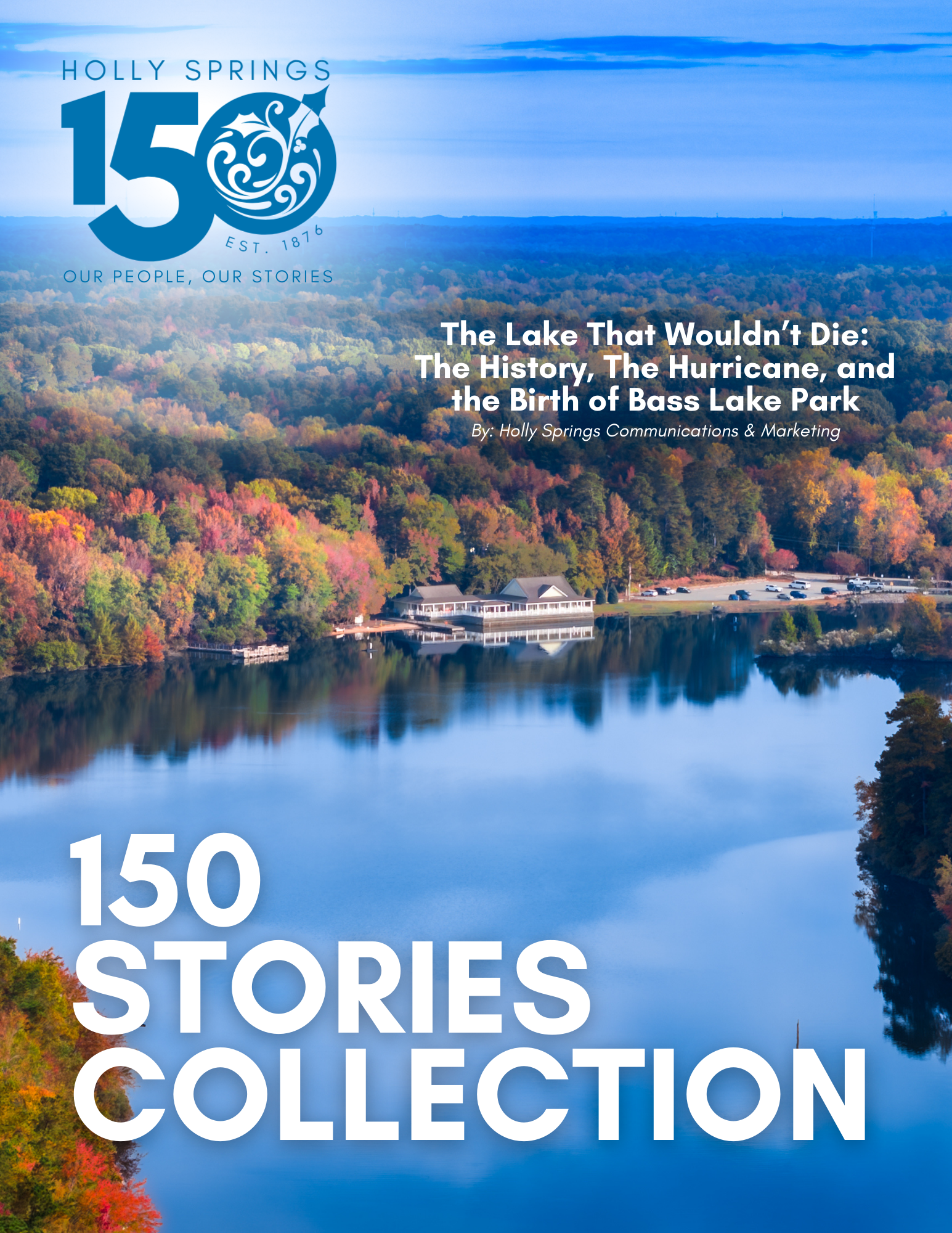
Today, Bass Lake Park is a centerpiece of Holly Springs—a tranquil spot for fishing, paddling, and walking a scenic two-mile loop. But the story of how this cherished public park came to be also involves a catastrophic hurricane that wiped out the lake itself.
Before the "Bass:" From Grist Mill to Mills Pond
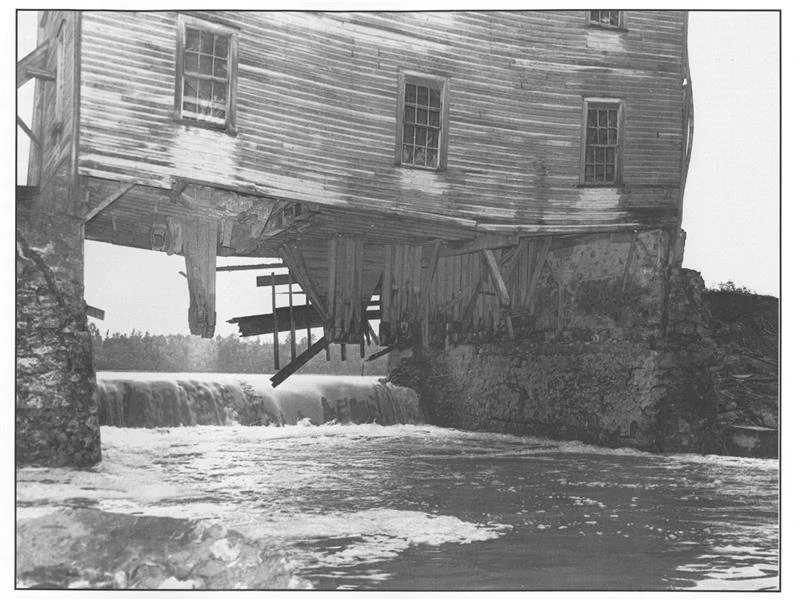
The shore surrounding the water that is now Bass Lake has always been a hub of activity. In the late 1800s, local resident Needham Norris built a grist mill there, harnessing the water flow for industry. By 1892, a man named John Mills bought the property and gave the lake its first formal name: Mills Pond.
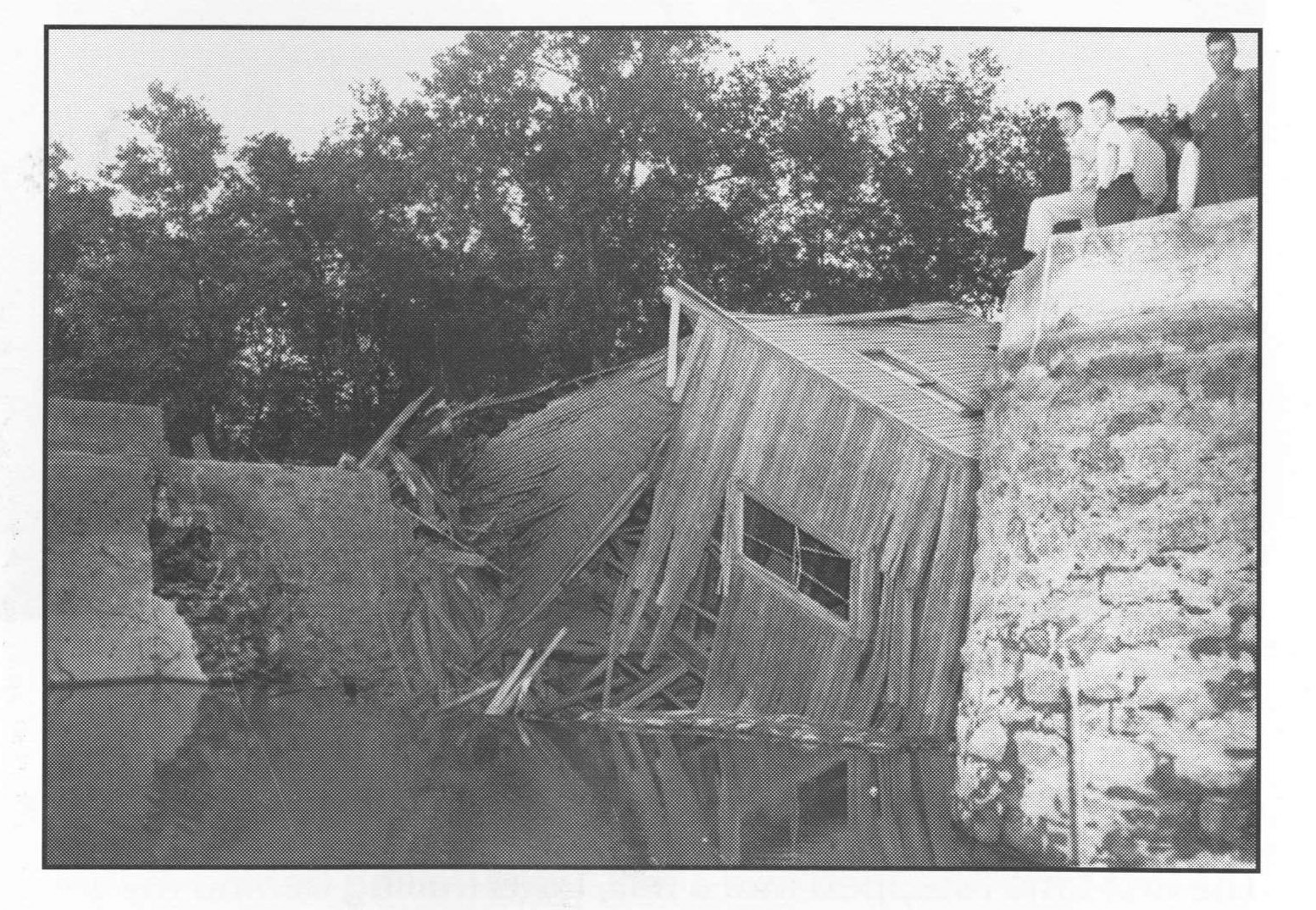
In the early 1900s, a country store stood on the banks. There, locals relaxed on the porch, sipped cold drinks, and paid 50 cents to fish. The old grist mill remained until a severe storm claimed it in May 1949.
The Era of James Harry Cornell
In the early 1950s, the property changed hands again. James Harry Cornell purchased the lake site, renaming it Bass Lake to reflect his passion for nature and wildlife. Cornell transformed the lake into a private fishing club.
The Day the Lake Drained
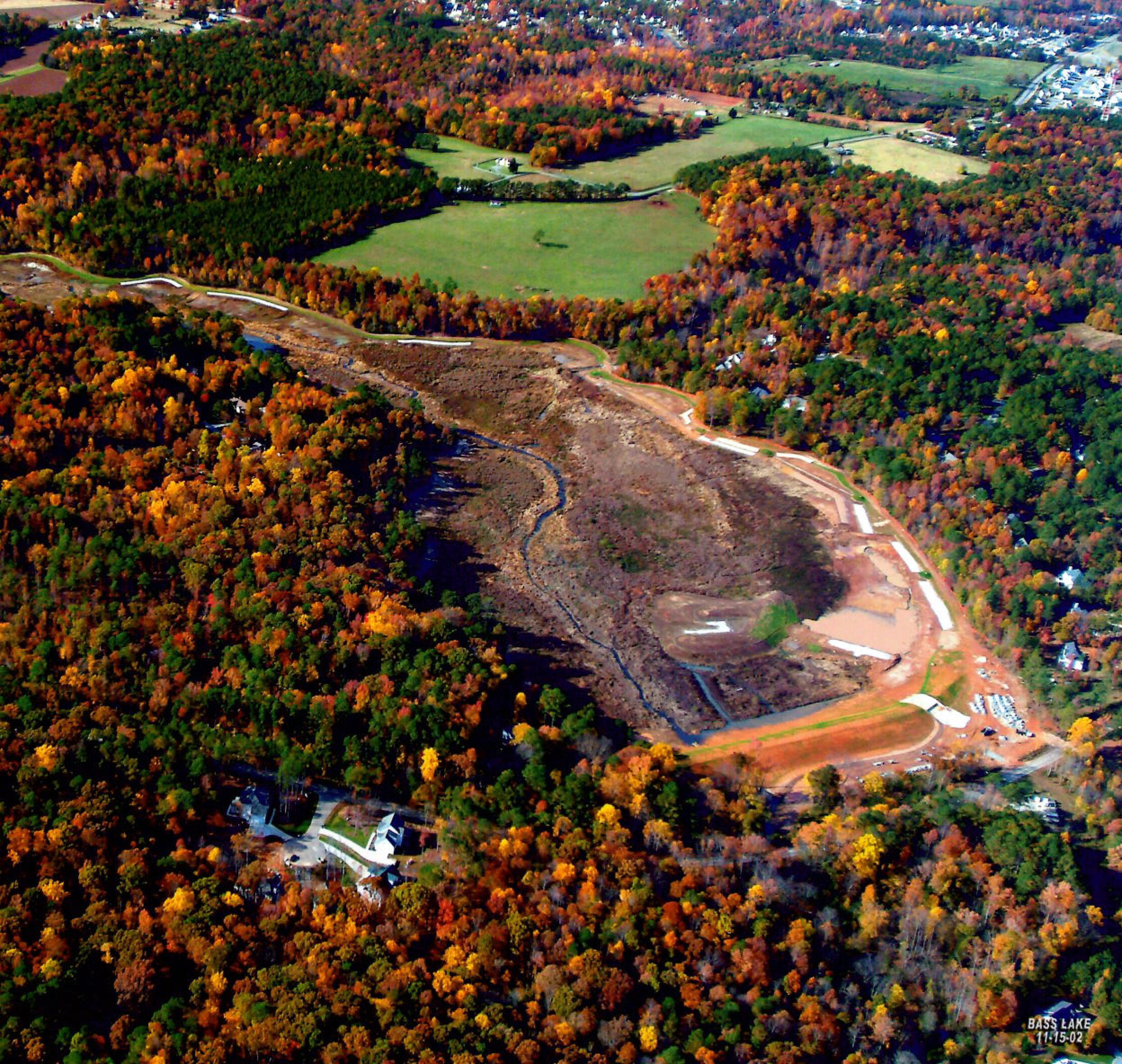
The lake's future hung in the balance in 1996 when Hurricane Fran tore through North Carolina. The massive storm proved too much for the old earth dam. When the storm wiped out the dam, the lake drained dry.
Locals, looking out over the empty basin covered in vegetation, began calling the site "Grass Lake." It was a muddy, marshy field, a far cry from the sparkling pond of decades past.
The Birth of the Public Park
The opportunity for the Town of Holly Springs to create a public asset arrived a few years later. In 1997, voters approved a $2 million bond that gave the Town the funding it needed to expand recreation opportunities. Then, in 1999, the Town of Holly Springs purchased the drained lake site and surrounding land – 84 acres in total. The Town set about the massive task of restoration. Bass Lake Park officially opened to the public in 2004 with a 54-acre lake still enjoyed today. In 2012, the Town purchased the adjacent 110 acres of Sugg Farm, preserving it as parkland as well.
Today, what was once a mill pond, then a fisherman's retreat, and briefly a storm-drained field, stands as a cherished public space, welcoming visitors to enjoy the tranquility of its waters and surrounding woods.
-
![]()
The Damaged Mill at Bass Lake
Remnants of the mill that used
to be located at Bass Lake -
![]()
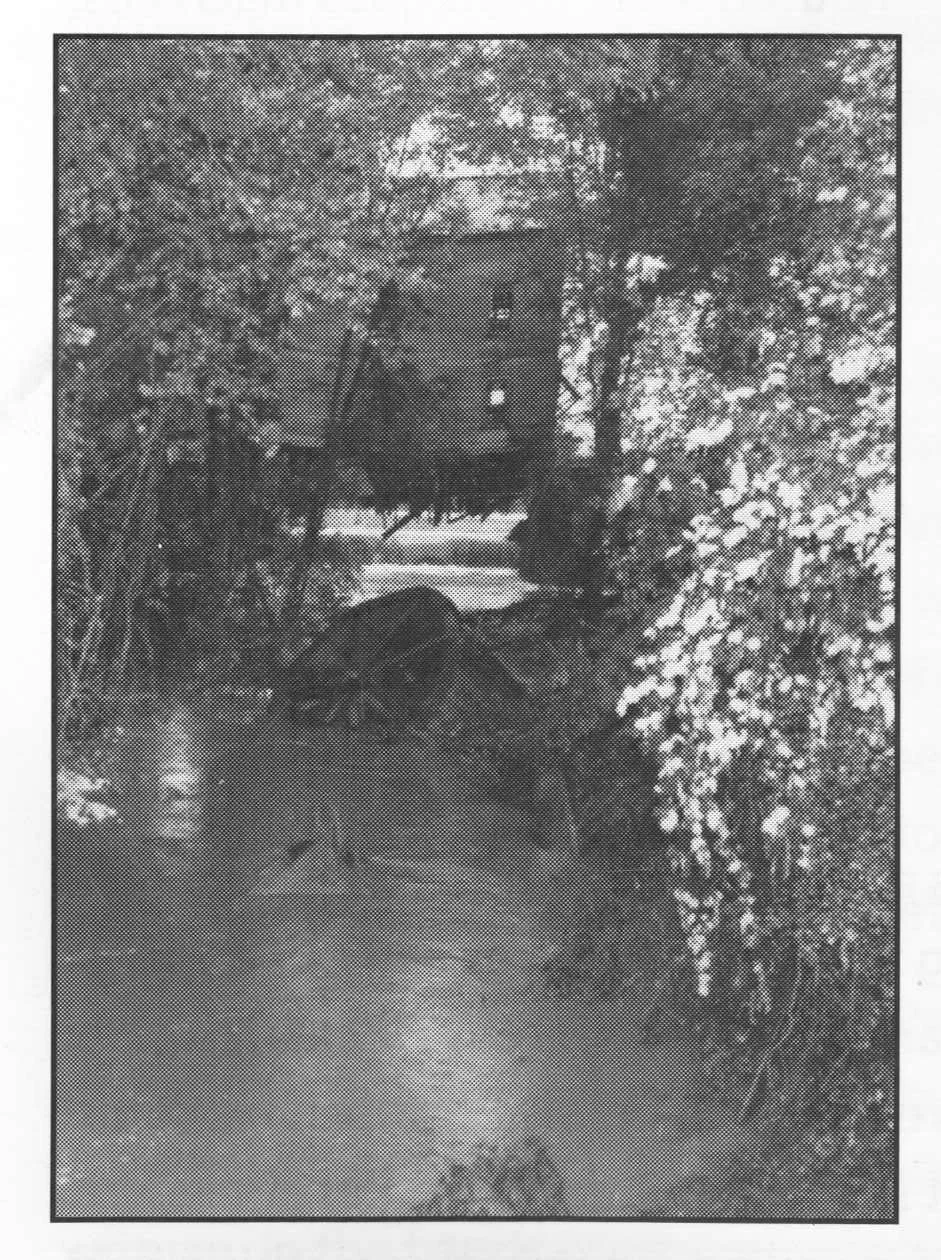
The Damaged Mill at Bass Lake
A different angle of the damaged mill that used to be located at Bass Lake
-
![]()
The Former Grist Mill
An old grist mill at Bass Lake remained until a severe storm claimed it in May 1949
-
![]()
Bass Lake Drained in 1996
In 1996, Hurricane Fran destroyed the old earth dam and the lake drained dry. Locals began calling the muddy, marshy site "Grass Lake."
-
![]()
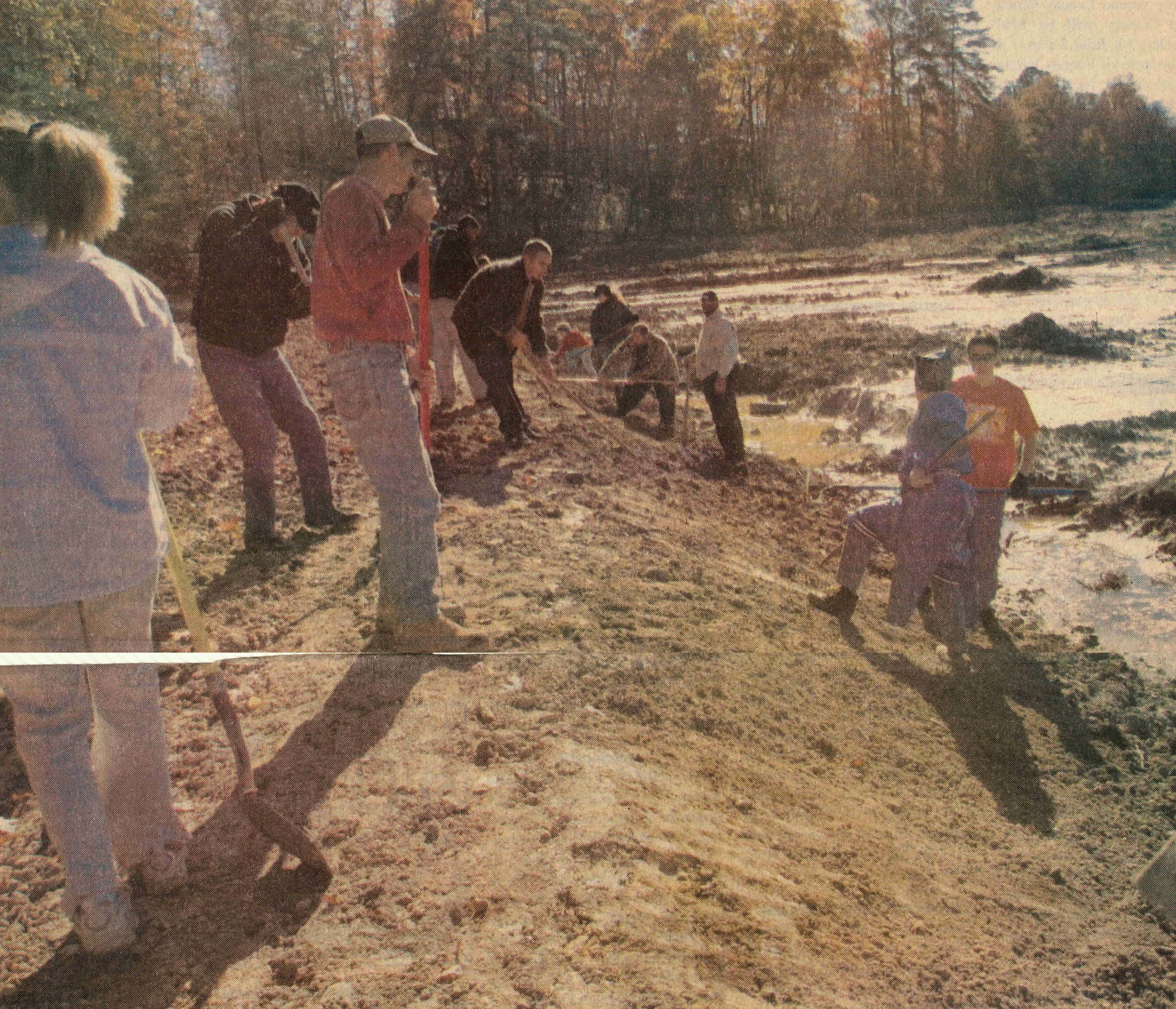
Teen Volunteers at Bass Lake
The Teen Council volunteered on a Saturday to help build trails during Bass Lake Park construction. The Town sought volunteers of all ages to help with trail construction during the project.
(Photo by Thomas Babb) -
![]()
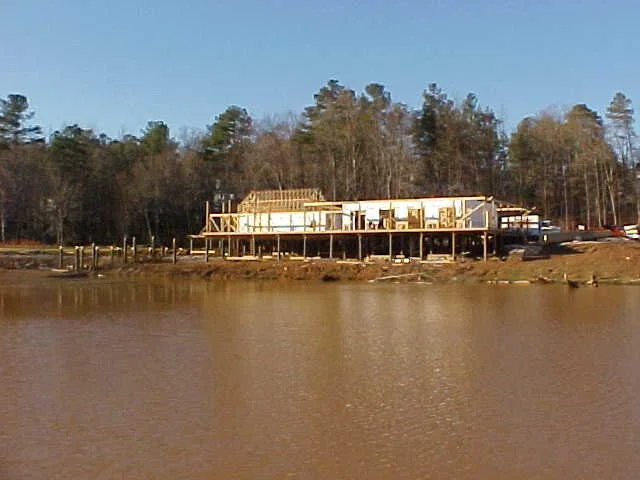
Bass Lake Retreat Center Construction
Construction of the retreat center at Bass Lake Park, which opened to the public in 2004