


The Long Road Home: Saving the Norris Holland Hare House
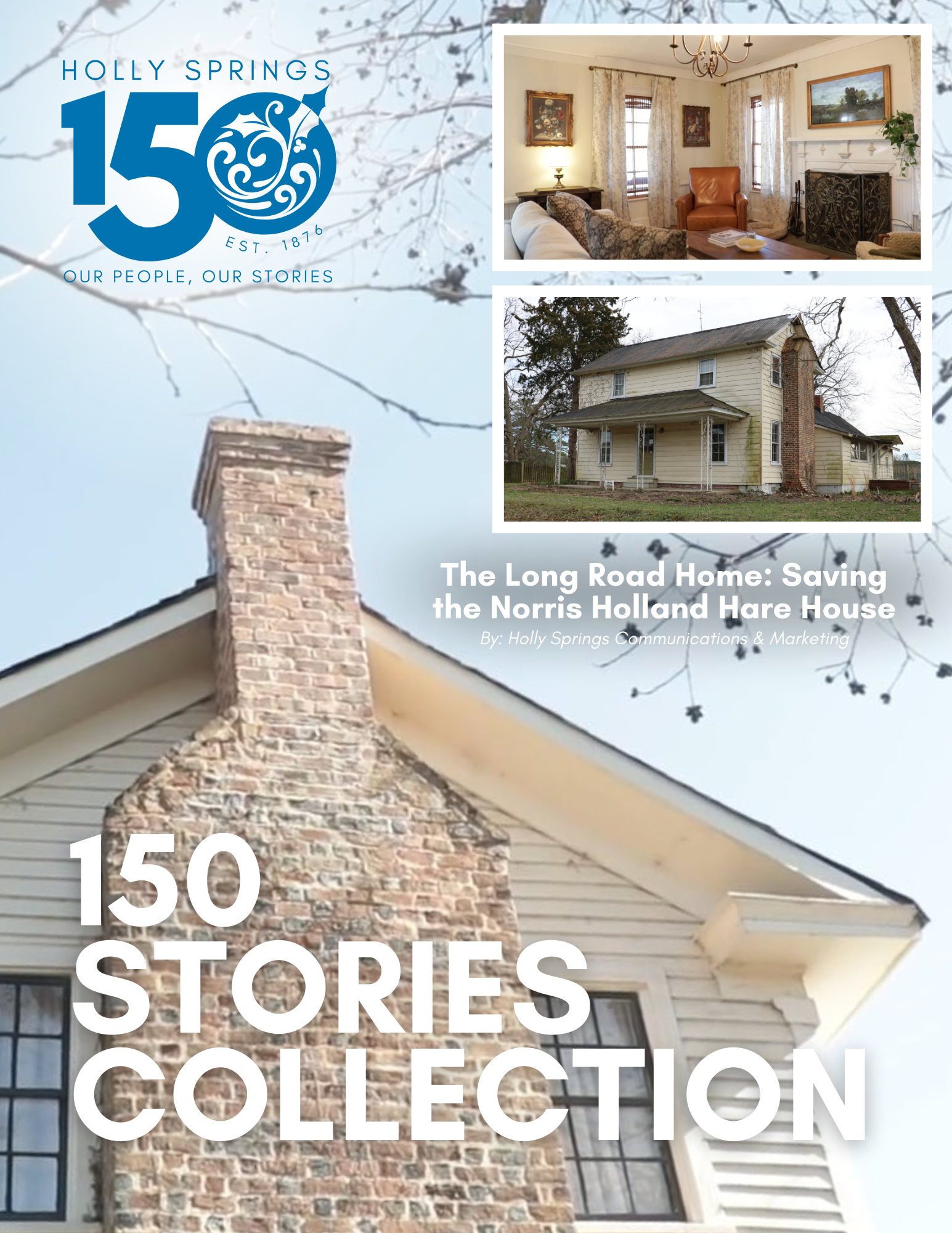
This is the story of the restoration of the oldest structure in Holly Springs Town limits, the Norris Holland Hare House. Built around 1805 by the son of a Revolutionary War veteran, the home along Avent Ferry Road eventually fell into disrepair and faced the threat of demolition.
To protect this piece of local heritage, the Town of Holly Springs purchased the property and later sold it to the Reed family, with the shared vision that the Reeds would restore and preserve the home’s legacy. The restoration process was grueling—and perhaps, in many ways, never truly finished—but the transformation was profound.
As homeowner Nichole Reed reflected on the journey, she noted, "I don’t think I would want to live in a traditional house because this house has so much character. It would be really hard to go back to a regular house now."
About the Home’s History
The Norris-Holland-Hare House is a Federal period house built around 1805 by Needham Norris, the son of Revolutionary War veteran John Norris, Jr. Needham Norris bequeathed the house and farm to his nephew, Simpson Washington Holland.
In September 1864 as the Civil War ground toward its final months, Holland headed to Virginia to search for his brother, a Confederate soldier. Left behind were Holland’s wife Mary Ann and their young children, including a week-old son. Simpson Holland died two months later without ever returning home.
For two weeks in April 1865, an encampment of Union soldiers encircled the Holland home. Mary Ann and her children lived upstairs while Union soldiers occupied the first floor as a field hospital.
The Town bought the house, saving it from demolition, with the expectation of selling it with preservation requirements. The Town worked with Capital Area Preservation on deed covenants that committed the new owners to preserving the structure’s character. Its history as a home and the high cost of adapting the structure for public use were reasons that preservation experts advised maintaining it as a private home.
Today, the restored home stands, nestled among century-old pecan trees. Family members who used to live in the home remember collecting pecans from those very trees to freeze for the winter.